TITANIUM WEEK

SAVE $310 TODAY

Expert Reviewed Evidence Based
10 Reasons Families Are Replacing Every Pan They Own With One Titanium Skillet

10 Reasons Families Are Replacing Every Pan They Own With One Titanium Skillet

Reason #1

No More Forever Chemicals In Your Daily Cooking

COATEDCOATED
NO COATINGNO COATING

Most pans sold as non-stick, including PTFE and the ceramic ones marketed as the safe alternative, rely on a coating sitting between the metal and your food. That coating is a wear item. It scratches, it chips, and above roughly 500F it begins to break down.

PTFE belongs to the PFAS family, the fluorinated compounds that do not break down in the environment and that regulators have spent the last decade restricting. The ceramic pans sold as the safe answer wear through too, usually inside two to three years.

Our pan has no coating at all. Not a better coating, not a titanium infused one. There is nothing applied on top, so there is nothing to wear off into your food.

Are all non-stick pans a problem?

Not equally, and we will not pretend otherwise. The issue is the coating as a category: it is consumable, it degrades with heat and abrasion, and once it starts going you are cooking on whatever is underneath. A pan with no coating removes the question rather than answering it.

What happens if I keep using my current pans?

If the surface is intact, nothing dramatic. Watch for scratches, flaking and dulling, and stop using metal utensils on them. Most people replace coated pans every two to three years, which is the real cost nobody counts.

Reason #2

It Cooks At Lower Heat, Because Bare Metal Touches The Food

It Cooks At Lower Heat, Because Bare Metal Touches The Food

A coating is an insulating layer. Thin, but it sits between the burner and your food and it changes how heat arrives.

Cooking on bare metal means the heat reaches the food directly, so most people find they run a notch lower on the dial than they are used to. That is worth knowing before your first cook, because the instinct with a new pan is to run it hot.

We are not going to quote you a percentage. Anyone selling you a lab number for how many vitamins their pan saves is inventing it.

Does it heat evenly?

Titanium conducts less readily than aluminium, so it has hot spots. Preheat for a minute or two and they even out. That is a real trade-off and we would rather you hear it from us than discover it.

Reason #3

Food Releases Without A Chemical Coating

Food Releases Without A Chemical Coating

Sticking is the thing that makes people give up on metal pans, and it is almost always a technique problem rather than a pan problem.

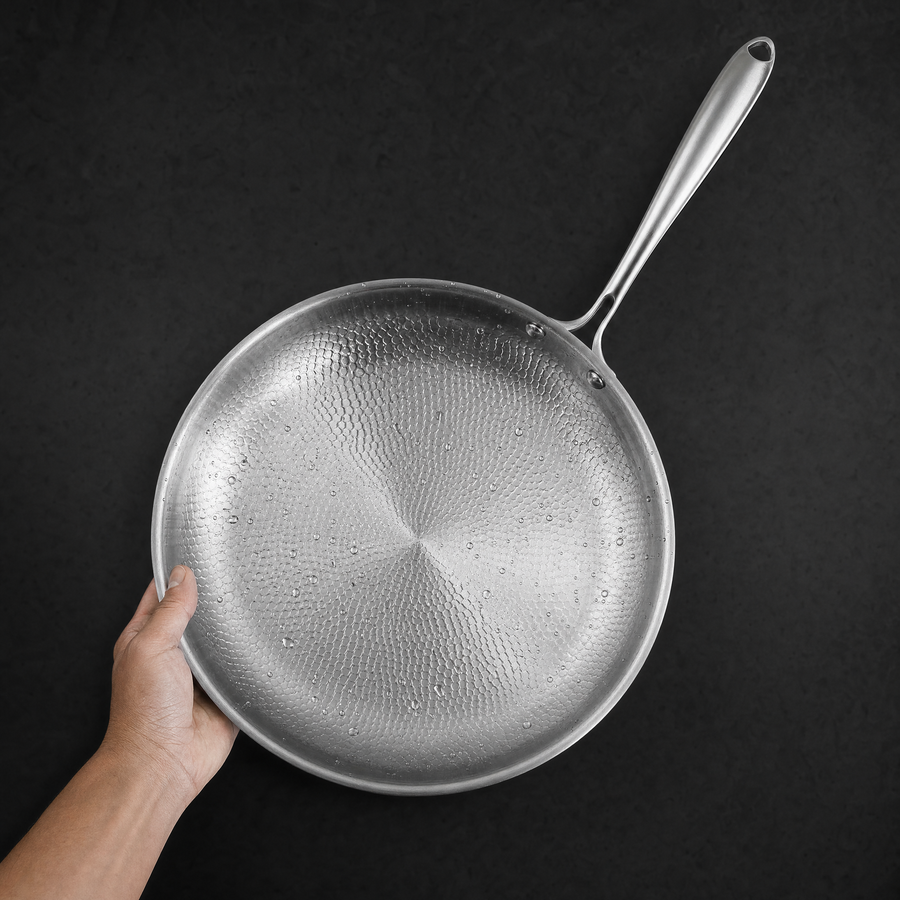
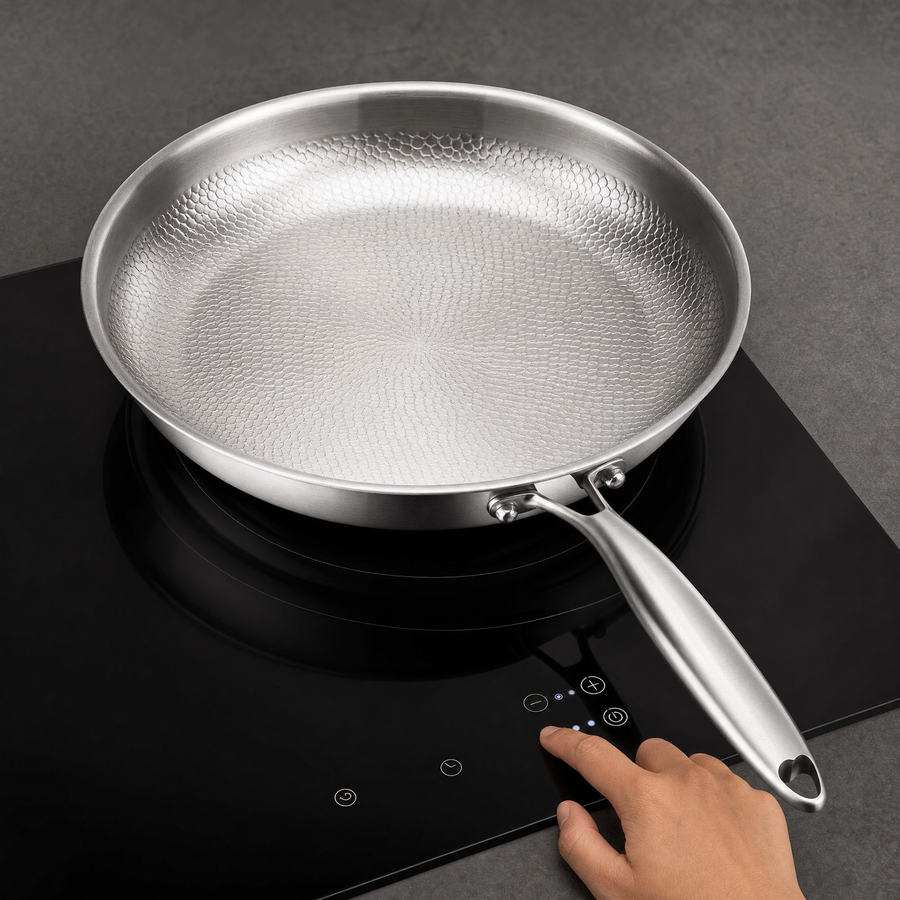
The surface here is hammered into a dense honeycomb texture. That texture is a shape in the metal, not a layer on it, so it cannot wear off, scratch through or stop working in year three.

The sequence matters: heat the pan first, then add the fat, then add the food. Get that order right and eggs release in one motion. Get it wrong and they stick, exactly as they would in any restaurant kitchen.

So is it non-stick or not?

It is not, and we will not sell it as one. It behaves like good stainless. Give it a minute of preheat and a thin film of oil and it releases cleanly. We would rather tell you now than refund you later.

Reason #4

The Expensive Pan Is The Cheaper One Over Ten Years

The Expensive Pan Is The Cheaper One Over Ten Years

A coated pan is a consumable. Two to three years is the honest replacement cycle, and at 50 to 80 dollars a time that is somewhere between 200 and 400 dollars a decade, spent quietly, in pieces, so it never feels like a purchase.

This pan is 149.99 and has no wear layer to lose. Nothing on it degrades, so there is no mechanism by which it stops working.

Price it against the four pans you would otherwise buy, not against the one on the supermarket shelf. You have ninety days to decide whether we are right, used, at our cost.

Why does it cost more than the pan in the supermarket?

Because it is solid metal with a hammered finish rather than stamped aluminium with a sprayed coating. The supermarket pan is cheaper per purchase and more expensive per decade.

Reason #5

Titanium Does Not Rust, Stain Or React With Your Food

PITS AND STAINSPITS AND STAINS
INERTINERT

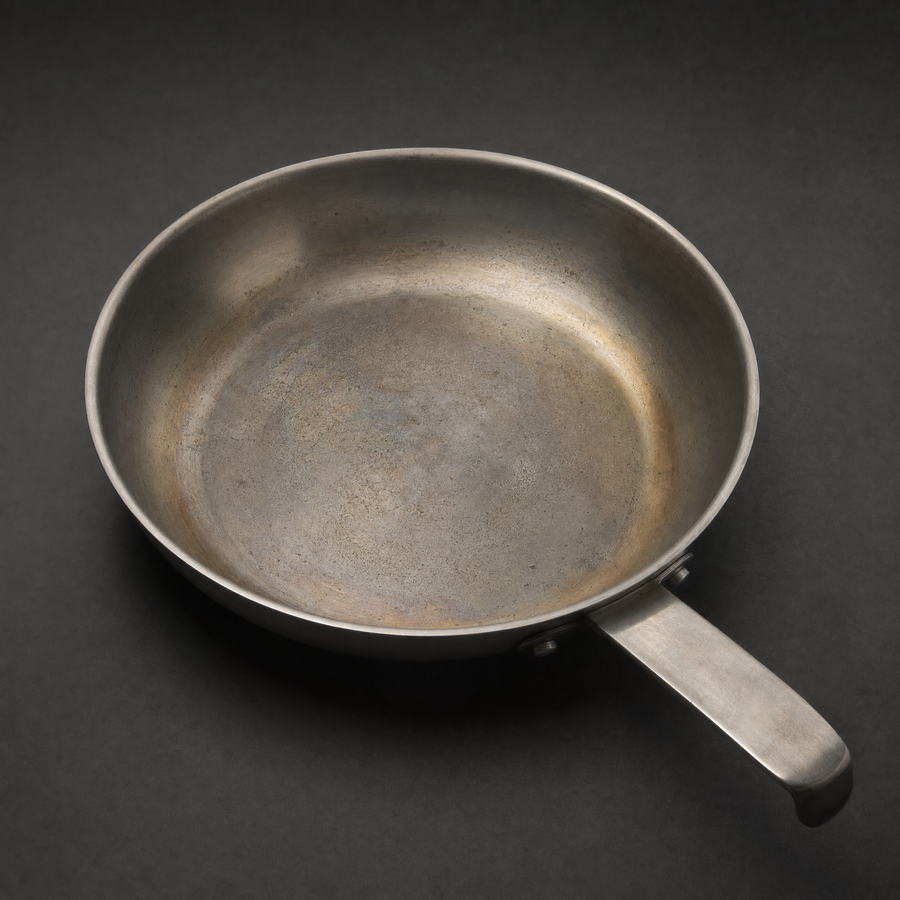
Titanium forms a thin oxide layer on contact with air, and that layer is why the metal is used for surgical implants and marine hardware. It does not corrode.

In a kitchen that means tomato sauce, wine, lemon and salt do nothing to it. No pitting, no metallic taste bleeding into an acidic sauce, no staining you have to scrub back out.

It goes in the dishwasher. Heat discolouration can appear as a faint bronze tint on the base, which is the oxide layer doing its job and is harmless.

Will it discolour?

Possibly, at high heat, as a faint rainbow or bronze tint on the base. It is cosmetic and harmless. A little bar keepers friend removes it if it bothers you.

Reason #6

Gas, Electric, Induction And Oven, With No Exceptions

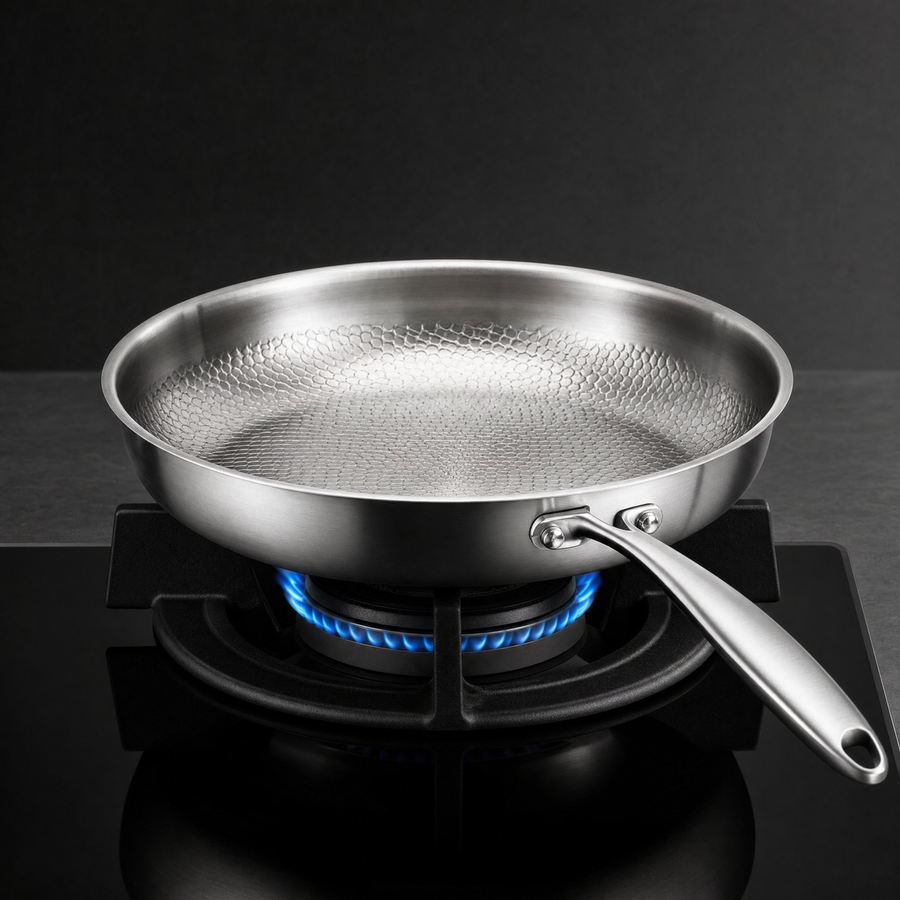
GasGas
ElectricElectric
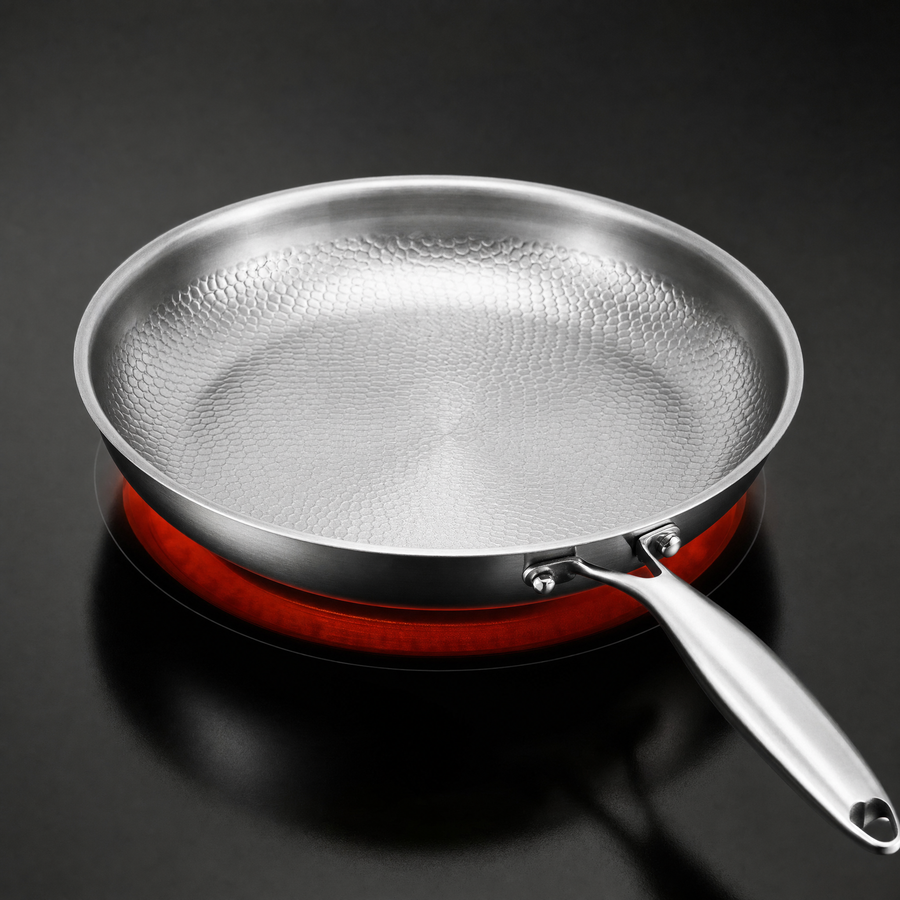
InductionInduction
OvenOven

Induction is the one that catches people out, because a lot of cookware quietly is not compatible and you only find out at home.

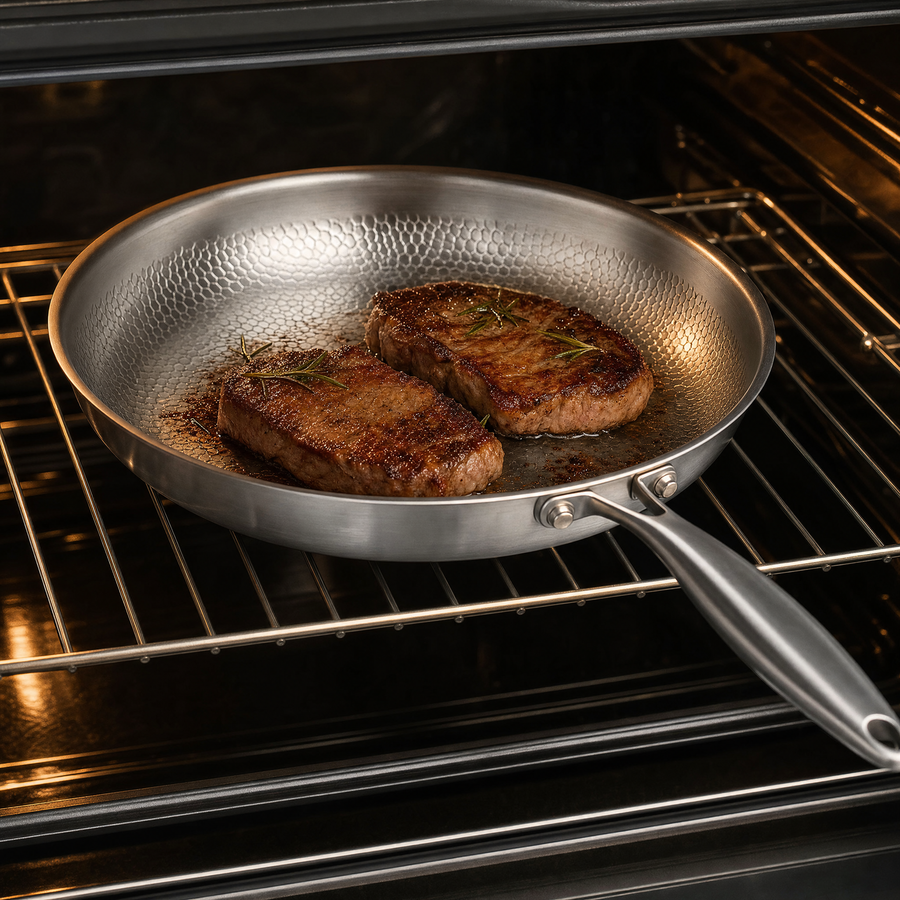
This works on all four. Gas, electric coil, ceramic, induction, and into the oven, because there is no plastic handle and no coating with a temperature ceiling to respect.

At 28cm it holds four eggs or two large steaks without crowding, which is the size that actually gets used daily rather than the one that lives in a cupboard.

Reason #7

Use Metal Utensils. There Is Nothing To Scratch.

Use Metal Utensils. There Is Nothing To Scratch.

Every coated pan comes with the same instruction: wooden or silicone only, be gentle, do not scrape. You are being asked to protect the pan from yourself.

Drag a steel spatula hard across this surface and nothing happens, because there is no coating there to cut through. Scrape the fond, use tongs, use a metal fish slice.

A pan that needs looking after is a pan you end up not using.

Will metal utensils leave marks?

You may see faint burnishing on the high points of the texture over time, the same as any bare metal pan. It does not affect how it cooks, and many people prefer how it looks after a year.

Reason #8

Straight From The Hob Into The Oven

Straight From The Hob Into The Oven

The handle is solid steel, riveted, with no plastic or silicone anywhere on it. Nothing on this pan has an oven temperature limit you need to look up.

Sear a steak on the hob and move the whole pan into the oven to finish. Start a frittata on the burner and put it under the grill. Brown chicken thighs and roast them in the same pan.

The handle gets hot, which is the honest trade for that. Use a cloth.

Reason #9

One Pan Instead Of A Drawer Full

One Pan Instead Of A Drawer Full

Most kitchens hold three or four pans because each one has a job it is bad at. The non-stick cannot sear, the stainless sticks, the cheap one warped.

A 28cm skillet that takes metal utensils, goes in the oven, works on induction and does not react with acid covers almost everything a home cook does.

It also stays out on the rail rather than in a cupboard, because it is not something you are protecting.

Reason #10

It Is The Same Pan On Year Ten As On Day One

It Is The Same Pan On Year Ten As On Day One

This is the whole argument in one line. A pan with nothing applied on top has no wear layer to lose.

There is no coating to scratch, no bond layer to fail, no surface that quietly stops releasing in the third year. It is solid metal, and solid metal does not have a service life the way a coating does.

That is why it carries a limited lifetime warranty, free US shipping, a free tempered glass lid, and ninety days to send it back, used, at our cost.

Sell-Out Risk:HIGH

Check Availability